
Invincible – Emma Lawrence

It is 2026, and Arsenal are the reigning Premier League champions. The stylish, progressive Gooners (also recently ‘Boring Arsenal’, heroic runners-up, also-rans, squibs resting on their laurels) have ended a twenty-two-year title drought. And they’ve done it amidst the extravagant excess and financial brinksmanship of a certain nation-state club whose form of success may forever be brandished with an asterisk.

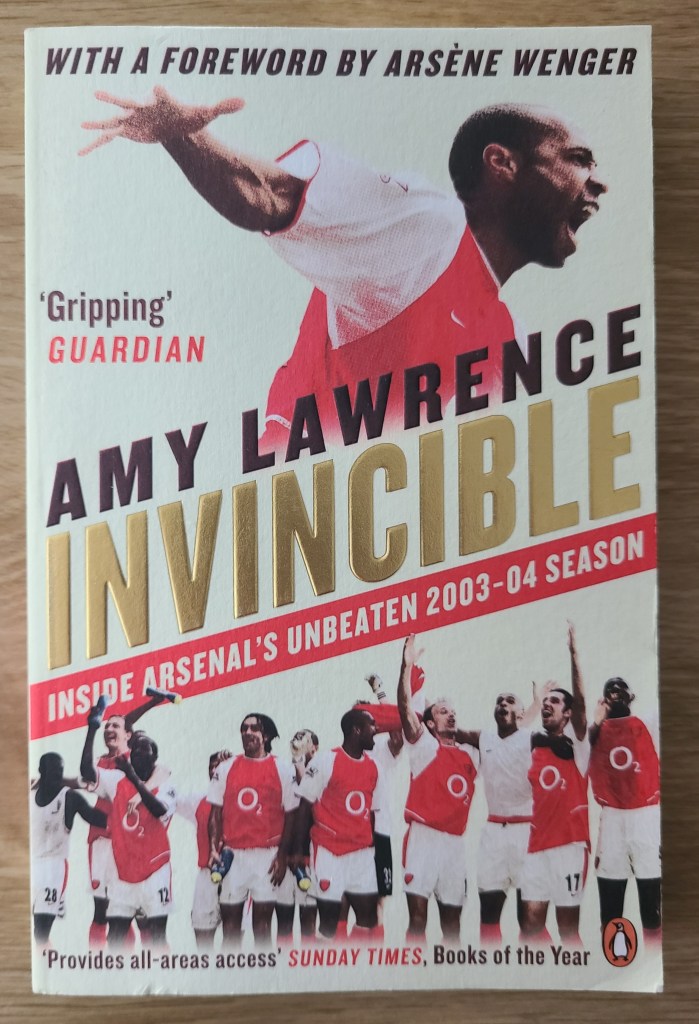
We look for grains of nostalgia in an era of apathy and cynicism to justify our present joy. In Invincible, Amy Lawrence provides us with this warm nostalgia as she confidently recounts Arsenal’s 2003-04 ‘invincible’ when the club romped to the PL title undefeated. In the shake-out, Invincible reminds us of those times when success was earned through grit rather than through exorbitant financial outlays.

As Invincible was first published in 2014, Lawrence writes with a decade’s worth of hindsight on that remarkable 2003-04 season. She relays the personal testimonies of Thierry Henry, Dennis Bergkamp, Patrick Vieira, Robert Pires et al. to describe how on-field success and camaraderie were achieved.

Invincible’s opening chapter depicts Ruud van Nistelrooy’s head-ringing smack of his penalty kick against the crossbar (and him getting a subsequent head-ringing from Martin Keown) during the infamous Battle of Old Trafford in 2003. That glorious crack of ball on wood still evokes the immense stakes that were at play in that particular time and place. Lawrence does well to kick off the Invincible narrative with it, as it was the most natural and thrilling way to show the intense Arsenal-Man Utd rivalry (read, Wenger-Ferguson rivalry) as an ongoing theme.

From there, Lawrence explores the Arsenal years leading up to 2003-04 to find what contributed to the “symphony of that season”. Interviews abound here. David Dein recounts slow-dancing Wenger to Arsenal. There are anecdotes about Wenger introducing better training standards, professionalism, and player nutrition (the well-worn ‘no-ketchup at the table’ yarn gets more play here) to the club to facilitate the PL titles in 1998 and 2002. The Arsenal mise-en-scène is thus established.

There are some anecdotal gems here for all readers. Vieira’s reminiscences of his first days at Arsenal are a highlight, including the suspicious fire at the London Colney training ground, and Remi Garde causing confusion by not translating the key word ‘alcoholic’ to him during Tony Adams’ infamous dressing room speech. Henry’s thoughts are brilliantly self-reflective. Lawrence comes at all angles to define Wenger’s formula that goes beyond simple ‘tactical touch’ and ‘managerial mastery’. Something of the elemental is there, too, elusive but palpable; whatever it was, the players are effusive with it, even if they are still baffled at the glorious final manifestation of their joint efforts: the ‘invincible’ season.

My favourite part of Invincible comes after the PL title was sown up with four games still remaining. Henry talks about the initial confusion the players felt when considering the idea of an unbeaten season, or the motivation after final victory required to reach that nebulous invincible status:

“The goal was abstract. There was no prize. At the end, what are you getting? You are fighting for something you will never see. We didn’t know they were going to make a golden trophy. It hadn’t been done before. We were fighting for a place in history. Something that has never been done before and may never be done again but there was no silverware or medal for it. It was kind of weird. I guess it was something we would look back on and think, Wow, but at the time I don’t think we realized how big a deal it actually was.” (pg. 177)

Followed by:

“I remember Patrick [Vieira] looking at me and saying, “There is no fight. I need to have a fight. I need to know that we need to get some points.” We were not realizing what was happening.” (pg. 177)

Lawrence’s discussion of desire and mentality in uncertain times brings the players to the fans’ level, our level. The cerebral Jens Lehmann is frustrated with the 2-2 draw against Tottenham to clinch the title, and Sol Campbell is equally perturbed. Where Lawrence asks, ‘What does it take to be undefeated?’, she teases out the question, ‘What is to be gained, or lost, by being undefeated?’ That period of uncertainty in confirmed victory still inspires human self-reflection in 2014, and Lawrence capitalises further on this in the short ‘Reflections’ chapter at the end of the book.

Discussion of the Invincibles seems to inevitably circle around Wenger. Invincible occasionally comes across as fawning, and its goal of finding out how Arsenal became invincible is subservient to the question What did Wenger do to make them invincible? Wenger writes the foreword and is interviewed in the epilogue (in that diplomatic and distant Q&A format). He bookends the narrative, letting Lawrence and the players do the talking. It starts and ends with him, that imposing demi-god of Highbury. It is like he is sitting on the patio deckchair, listening to his children’s discussion inside the house, and coming back in to definitively weigh in. This criticism is the trade-off Invincible makes for not featuring Wenger throughout; it is better to be talked about, rather than being there to take the words out of players’ mouths.

Yet I feel that Lawrence misses a trick in Invincible by this player-first approach in not including the full complement of Invincibles. Twenty players are named as Invincibles, yet six of them are conspicuous in their absence in Invincible: Jose Antonio Reyes, Sylvain Wiltord, Pascal Cygan, Gael Clichy, Nwankwo Kanu, and Jeremie Aliadiere. The roles of Reyes and Aliadiere both represent the sacrifices made by some players to buttress the success of the whole. Unfortunately, little else is given in Invincible about the other ‘glue guys’.

To use Lawrence’s symphony metaphor, the symphony is played and driven by the dominant instruments. It sounds authoritative and majestic, but is missing that middle-ground timbre of the viola squashed between the violin and cello heavyweights. In such history-defining season write-ups like Invincible, I seek and appreciate the voices of the in-between or on-the-margin, as much as I do the voices of the household names.

In being the definitive account of Arsenal’s 2003-04 season, Invincible both caters to the Arsenal fans and non-fans alike, and the intersection between the two: that seemingly shrinking middle ground of appreciators of good club football despite the team and the rivalry. Invincible’s broad sweep to cater to all is a strength; as such, things are inevitably left out. In an era where team tribalism has an added dimension of vicious entitlement through billionaire backers, it is beneficial for football fans to remember that an instance of glory is an event that forever culminates in the collective rise and fall of others. Invincible, in conveying the details of that unforgettable 2003-04 season, provides a philosophic element to the act of winning, and how remaining unbeaten for so long masks the existential difficulties players face when there is nothing more to win.

Arsenal crashed out in the semis of both domestic cups and the quarter-final of the Champions League in 2003-04. Lawrence stresses this fact in the book and how it affected player mentality. She elicits the following response first from Vieira:

“Two competitions extinguished in four days. From treble to terrible. The mood was sober, and even years later, lasting regret about the ones that got away is manifested in hard stares and rueful shakes of the head. “We underachieved in the Champions League,” says Vieira.” (pg. 106, on losing to Chelsea in the UCL)

And then Wenger:

“I could see we were jaded [after the Chelsea UCL match]. So I think if I made a mistake that season, that was not to sacrifice the game against Man United. Many times the Champions League conflicts with the FA Cup and you sit there and think, What did I do? [He exhales deeply] That season we could have won everything. I tried to do it. We had the squad to do it. We had sixteen or seventeen players of top, top level.” (Wenger, pg. 212)

I’ve always been interested in the use of the ‘invincible’ adjective in sport. Yet can it truly be used in a footballing context? With the sheer number of games across a season, the importance of the domestic league, and the depth of social and historical significance of cup games, can the ‘invincible’ appellation (with its connotation of otherworldly power and utter dominance) be applied to a team that drew almost half as many games as it won in the 2003-04 Premier League?

As readers, we look for the fallibilities to explain the ‘invincible’. These fragilities are somehow more inspiring. The invincible is boring, it has plot armour, and it always has the rub of the green. Lawrence thinks similarly: by highlighting the flash of a soft underbelly and by amplifying frustrations, she undermines the ‘invincible’ and makes it believable.

What results is a very human story that we can all identify with because, through our varying life experiences and challenges, we want to regard ourselves as ‘unbeaten’, ‘indefatigable’, and ‘unbowed’, despite it all. In football, our clubs experience success in response to the success of other clubs. The current Arsenal side, as incumbent PL champions, achieved success drawing from the Invincible template as much as it did from the Man City template* from recent years. Yet who knows how long before Arsenal finds success again?

This is why Invincible is worth your time. Read it, knowing that Lawrence hits upon that deep well of fragility that exists in all success, including our own.

STARS: 4/5

UNDER 20: This definitive account of the Invincibles relates the inherent fragility that existed at Arsenal during that wondrous season.

FULL-TIME SCORE: The game is won and ultimate success is achieved. The camera crosses to the celebrating players, then to the proud manager, and back again, and then back again, and all the while we know how burdensome it can be, this thing called winning.

RELATED READING: The Unbelievables by David Bevan (2016); Stillness and Speed: My Story by Dennis Bergkamp (2013)

Tinseltown: Hollywood and the Beautiful Game – Ian Herbert

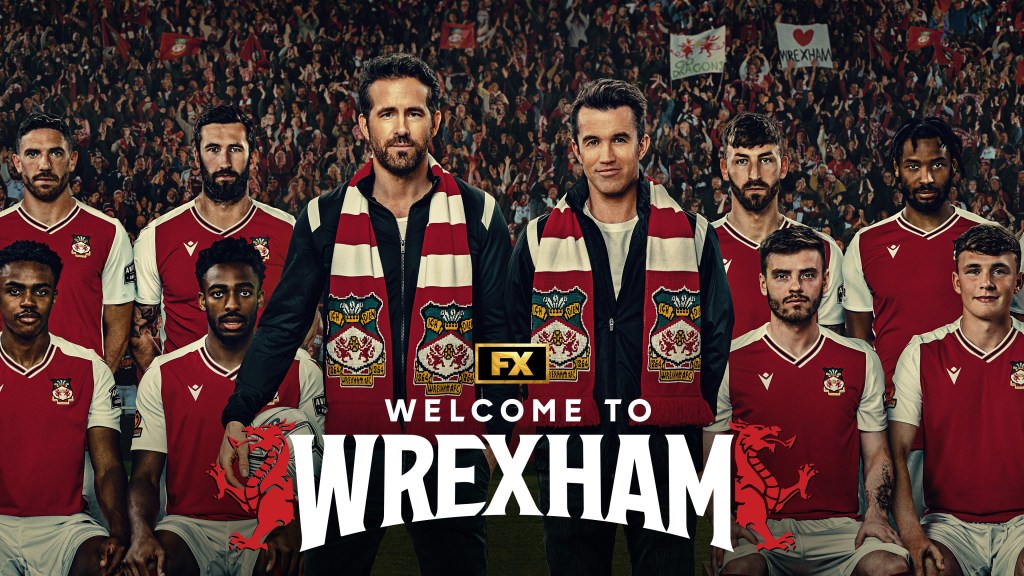
You’ve probably seen or heard that Ryan Reynolds’ and Rob McElhenney’s ownership of Wrexham has propelled the club to trophy glory, commercial success, and into American popular consciousness. Welcome to Wrexham, the fly-on-the-wall documentary series and cultural phenomenon that charts Wrexham’s startling rise from National League to Championship over four entertaining seasons, addresses the cynicism of modern-day club ownership by thumbing its nose at PR-massage jobs like All or Nothing.

And if you haven’t seen or heard about it—perhaps that rock that you’ve been living under needs some lifting. For Welcome to Wrexham is stirring viewing, and deserves your attention.

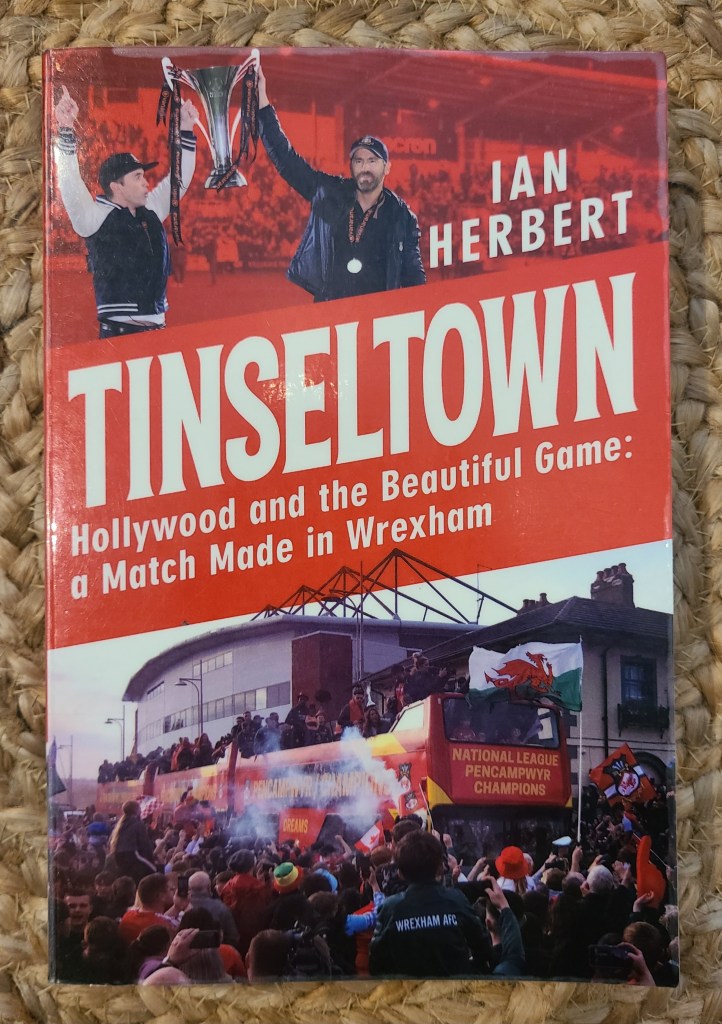
Tinseltown: Hollywood and the Beautiful Game by Ian Herbert is a well-researched and straight-man foil companion piece to Welcome to Wrexham. There is little of the charming snark and wit of the documentary series in Tinseltown, but through Herbert (a Wrexham fan and respected Daily Mail journalist), we can learn more about the club and the city’s history to fully flesh out the angles of anxiety, faded glory, missed chances, and tragedy that haven’t been given the Disney treatment in Welcome to Wrexham.

“Covid’s arrival might have saved Wrexham from relegation but its refusal to go away took what little hope there was left. The turnstile money disappeared, along with the perimeter-board advertisers and the broadcast revenue from occasional live matches on BT Sport. The water and electricity were switched off, the groundsman was paid a retainer to keep out intruders but the turf was no longer cultivated and weeds took over the ground.” (pg. 21)

Herbert writes affectionately about his beloved Wrexham whilst acknowledging the city’s working-class history that is greatly coloured by tragedy. This is a city very obviously under the cosh and living off the fumes of past footballing and industrial glories. Tinseltown’s stories of drug use, juvenile delinquency, and matchday hooliganism underlie the homely football chats over coffee, slow motion redemption shots, and charming stoicism that Welcome to Wrexham routinely serves up.

Tinseltown covers Wrexham’s 2021-23 seasons (which correspond with Season 1 and 2 of Welcome to Wrexham). Familiarity with the documentary series quickly helps us to recognise the knockabout characters around the city (Wayne Jones and Wayne Clarke), the pragmatic heads in the clubrooms (Shaun Harvey, Kevin Mulholland), and the breakout stars (Lili Jones and Rosie Hughes) that are further described in Tinseltown. Herbert also introduces others who don’t appear in the series (for example, club advisor Les Reed, and the shoe repair expert) yet still contribute to the fabric of community and success at the club and around the city.

History features prominently in Tinseltown. Herbert expertly recounts how the Gresford Colliery coal mine disaster of 1934 inflicted multi-generational and shared civic trauma on the city of Wrexham, and how this trauma has infused with the club’s brief snatches of success and its more recent freefall into the depths of the National League. The trauma is palpable as we read that Wrexham’s ignominious survival from relegation from the National League was guaranteed by 0.08 points—a computational reprieve derived from calculating their points-per-game number after Covid lockdown brought an early end to the 2019-20 season. At the lowest ebb of the club’s 156-year history, Ryan Reynolds and Rob McElhenney come in and, well, you probably know the rest of the story (or fairytale).

As an invaluable resource the Wrexham story, Tinseltown shines when providing depth and granular detail to what is only hinted at, or glossed over, in Welcome to Wrexham. Such depth includes:a McElhenney thought bubble is followed up by Humphrey Ker as he scours Transfermarkt and FM for a suitable club for McElhenney to invest in (Wrexham? Macclesfield? Hartlepool?); rumours of a Russell Crowe takeover abound; Les Reed’s incisive spotting of playing talent; the sliding doors moment of Stockport signing Paddy Madden instead of Paul Mullin; and the club being happy to eat fines earned from using the wrong kind of signage for a televised FA Cup game. The nature of these details is darkly humourous considering how the club was run on the thinnest of shoestrings not so long ago—a humour that its owners, as they shoot self-deprecating commercials in the Wrexham dressing room, would readily recognise.

“At a stroke, a decades-old narrative at Wrexham was being rewritten. This was a club which had generally prevailed through managers squeezing value and building quality out of players who cost relatively little, though progress this time (if and when it came) would be inorganic. They were spending for success.” (pg. 133)

Herbert casts his journalistic eye far and wide across Wrexham in weaving Tinseltown’s narrative. He occasionally breaks away to give short, italicised vignettes of various characters around Wrexham. These asides do not always emotionally land, and can feel intrusive and jarring. The methodical pacing of relating Wrexham history and Reynolds’ and McElhenney’s genuineness in conducting due diligence on their ambitious new venture, is blunted by pages of quickfire form and result dispatches from the games in the final run in to the 2021-22 season. These dispatches attempt to set up a thrilling denouement, yet since we already know the ultimate result of it all—having already white-knuckled it through the slick production values in Welcome to Wrexham’s final episodes of Season 2—doesn’t impact as much as Herbert intends.  

The quickened pace in the final third of Tinseltown also throws up some avoidable errors, with the most glaring being whirlwind striker for the women’s team and legitimate star of the series, Rosie Hughes, being called ‘Rosie Jones’ across several pages, including a reference to Paul Mullin being “the male Rosie Jones”. These editorial lapses chip away slightly at the credibility that Herbert has worked hard to establish.

One of the most fascinating insights that Tinseltown offers (and is hinted at by the connotation of glittering superficiality of the word itself) come with Herbert’s brief observations of Wrexham becoming a commercial vehicle for advertisers and content creators. Welcome to Wrexham shows replacement goalkeeper Ben Foster coming out of retirement to continue his vlogging of goalmouth scrambles, and using the content for his online channel and podcast. Herbert even writes of how attempts to bring in Hal Robson-Kanu and Gareth Bale to wreak havoc on hapless lower league defences fell through. “Fans didn’t want the club to become a content factory” Herbert writes, “a place where old pros went for a last pay cheque.” As objective viewers of Wrexham’s bankrolled success, we cannot help but feel cynical in an age of contemporary football that gives us more than enough reason to be so. Herbert continues: “…amid the team’s inconsistency, the documentary team began seeing the potential of an episode built around that. It would be called ‘Sack the gaffer’. Again, sensitivities were not spared in the quest for creative output.”

Reading Tinseltown is important because it contextualises and voices our cynicism to Wrexham’s newfound success. What can we make of Reynolds’ and McElhenney’s ownership and social philanthropy in an age when ruthless asset-stripping owners and oligarchs who mobilise the wealth of nation-states to launder reputations, continue to run roughshod over proud club histories? “Why had this story of Rob, Ryan and Wrexham captured the zeitgeist in such an extraordinary way?” Herbert asks. He parses the elements of the Wrexham rags-to-riches story and excels in cutting through the cynicism to give us some answers. These answers help us to cheer Wrexham and Reynolds-McElhenney on, even if only begrudgingly, as the freewheeling counterpoints to the scores of irresponsible owners who have, and continue to, grind proud clubs into dust.

Following Tinseltown’s publication, Welcome to Wrexham has stretched to four seasons, and a fifth (filming Wrexham’s Championship tilt in 2025-26) is forthcoming. Over seasons three and four, we watch as footballing journeymen Steven Fletcher and Jay Rodriguez join Wrexham. These expensive signings are the predictable, banal trappings of bankrolled success; the kind of well-worn names that are somewhat antithetical to the community-focused mandate that Reynolds and McElhenney espouse. Where there’s money to spend, there will be a late-30s, in-from-the-cold big earner to vindicate the realists who know that the price of the relentless push for success in the short-term is long-term unsustainability. When will the fatigue hit? Or even the content fatigue? In Herbert’s Daily Mail article from 4th March, 2025, he writes:

“…it sounds perverse to hope that the club actually don’t win a third successive promotion and make the unprecedented leap from National League to Championship inside three years this spring. I don’t think I’m the only one feeling a sense of unease about that, though. In the cold light of day, I don’t want it to happen… It’s hard to dispel a sneaking suspicion that the breakneck pursuit of Championship football is, to some extent, driven by [Reynolds’s and McElhenney’s] ‘Welcome to Wrexham’ documentary. While the Championship secures more documentary seasons, it’s hard to see a year’s consolidation in League One providing quite the same streaming gold… Wrexham don’t have a training ground. They still only have a temporary stand in place of the old Kop, so the Racecourse will be three-sided when work on a permanent Kop starts… The football journey may have been incredible, but at ground level, little has changed in the five years since McElhenney and Reynolds bought Wrexham.”

Whether Herbert likes it or not, Wrexham currently sit in a respectable 15th place in the 2025-26 Championship season. Tinseltown, in covering up to Wrexham’s promotion to League Two, only tells half of the Wrexham story under Reynolds and McElhenney. And considering Herbert’s recent scepticism, perhaps he has only told half of his story. On the strength and depth of his writing in Tinseltown, a follow-up would undoubtedly be warmly welcomed and similarly fascinating to read.

“We want to become part of your story. We don’t want you to be our story.” (pg. 378)

STARS: 4/5

UNDER 20: A gripping exploration of the Welcome to Wrexham phenomenon that provides a counterpoint to the soullessness of modern club ownership.

FULL-TIME SCORE: Home-grown Herbert, the defensive cover, works tirelessly to ensure that the depth of glittering new talent further up the pitch put in a shift to win the game 3-0.

RELATED READING: My Wrexham Story: The Inspirational Autobiography from the Beloved Football Hero by Paul Mullin (2023); From Hollywood to Wrexham by Peter Read (2023)

Find Tinseltown: Hollywood and the Beautiful Game on Amazon