Catastrophic airplane crashes darkly colour the history of football through the deaths of our heroes past and present. Torino FC at Superga in 1949, Manchester United at Munich in 1958, and Chapecoense over Colombia in 2016 are recent tragic examples of this sad history. In each instance, we mourn the loss of life and lament the joys the lost players had provided and had yet to provide. The passing of time gilds and lionises their lives. And we remember that air travel to fulfill mid-week and weekend fixtures is a necessary part of a team’s pursuit of success; we may remember this, but we take it for granted, just as we do with our own flying experiences. For with the sophistication of modern-day air travel, statistically speaking we will never personally encounter such in-flight danger ourselves in a lifetime of flying.
When a crash occurs—whether or not it results in death—we tend to take notice. On 30th March 1998, the Leeds United team walked away unscathed from a potentially deadly plane crash shortly after taking off at Stansted Airport. A daring act of heroic piloting ensured the survival of all players, passengers, and crew on board. Yet this crash has remained largely forgotten by the footballing world well into the present day, and raises questions about our general perceptions of empathy and gratitude, and how and when we choose to extend those thoughts to survivors, victims, and our own selves.
* * *
So—what on earth happened? Let’s first look at the basic facts:
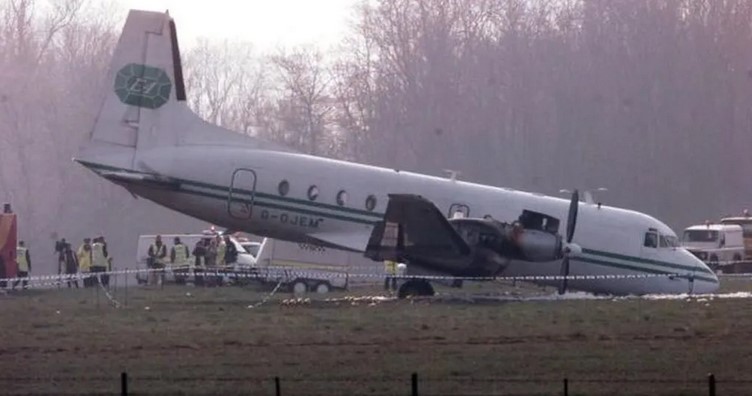
On the night of 30th March 1998, following a 0-3 loss to West Ham, the Leeds United team (18 players) and an assortment of team staff, fans, and other passengers (26 altogether, including crew) boarded an Emerald Airways flight at Stansted Airport to return to Leeds Bradford Airport. At just after 11:30pm, the Hawker Siddeley HS 748 turboprop aircraft suffered a catastrophic right engine failure seconds after take-off. With the engine on fire, pilot John Hackett decided to immediately land the plane to avoid an in-flight explosion and certain death. Upon landing, the aircraft slid along the runway and overshot into a grassy field where it came to rest, with its nose heavily planted into the ground. All 44 occupants evacuated the aircraft in less than a minute. No significant injuries were reported, and the engine fire was soon extinguished by airport fire crews.
Next, let’s look at the onboard accounts that give some personal insight on the crash:
When the engine failed, some passengers seated on the right side of the plane alerted the crew about shower of sparks and sheets of flame coming from the wing. Upon learning this, pilot John Hackett decided to ditch the plane. Leeds United goalkeeper Nigel Martyn’s game of hearts across the aisle was interrupted. The issuance of emergency procedures led some to confuse the command of ‘fasten seatbelts’ with ‘unfasten seatbelts’, and duly unfastened them when adopting the brace position. Hackett cut the left engine’s power, and the plane dipped down. Leeds United assistant manager David O’Leary said that the plane “came back down like a rollercoaster, and hit the deck.” Bryn Law, the BBC Radio Leeds commentator, said that the plane “bounced along four or five times, for interminable long seconds,” and his co-commentator and Leeds legend Norman Hunter said that they were all simply “waiting for the impact”. Lee Bowyer said, “It’s just gonna blow up. That’s it, we’re dead.” O’Leary continued that “you didn’t know where you were sliding to, were you going to hit a brick wall, or you were going into a house or what…and all of a sudden we slid, and slid, and slid, and stopped, and then it was time to get out of the plane.” According to Martyn, a deathly silence fell over the cabin until midfielder Lee Bowyer got up from his seat to calmly take out his carry-on bag from the overhead bin. Defender Robert Molenaar, anxious of the still-burning engine beside him and striker Jimmy Floyd Hasselbaink, said “Can we hurry up? It’s getting warm here” in an attempt to expedite the evacuation. In the panic, Rod Wallace tried to exit the plane from the right, where the fire was still blazing. O’Leary, seated by the left emergency exit, injured his shoulder by trying to push out the emergency door that would only open when pulled inward. All occupants evacuated the plane; Martyn gave chairman Peter Ridsdale a push when the latter seemed nervous at the prospect of jumping out on to the wing. Martyn walked out of the plane still clutching his hand of hearts. Bryn Law remembers looking back and seeing the plane silhouetted by the orange flames, and bodies dropping down from the emergency exit.

Finally, let’s look at the accident report released by the Air Accidents Investigation Branch in March 2001. The report makes for fascinating reading, and adds a necessary layer of formality to the crash:
The report states that “there was no evidence of any indications, flight deck or otherwise, that could have warned the crew of abnormalities with the engine…There was therefore no reason for the crew to abort the take-off”. An engine failure after take-off would typically involve the pilot to make a ‘go-around’ to account for working through failure check-lists ahead of an emergency landing, but with the devastating fire occurring four seconds after take-off, Hackett feared “for the structural integrity of the aircraft…and aware that a considerable amount of runway remained ahead of the aircraft, he made the decision to re-land…once made, the decision was irrevocable.” Hackett’s decision to ignore protocol and land immediately after the engine failure was vindicated by the report, which stated that “the decision to re-land had to be made rapidly with the information available at that instant. This decision was sensible in the circumstances, as was his decision to take control from the competent but far less experienced First Officer [Gary Lucas]”. Around 27 seconds after take-off, the plane touched down with 448m of runway tarmac remaining ahead of it. The plane slid for another 118m past the end of the tarmac, and finally came to rest on the level grassy field beyond—558m further from where it touched back down. Engine debris was scattered over a distance of 500m, and according to Hackett, there was still 3.5 tonnes of fuel left in the plane, ready to ignite, as passengers evacuated the plane. In the end, Hackett was last off the plane—symbolically putting a cap on the successful emergency that was informed by a quick analysis of danger, swift-decision making, and healthy dose derring-do.
The passengers, after successfully jumping from the burning plane, returned to the terminal worse for wear. They called their loved ones. Bryn Law borrowed defender David Wetherall’s phone and called his wife. This led to a tip-off to the BBC, and from then the story was out. When a replacement flight to Leeds was offered, it was roundly rejected by passengers, who favoured a long coach journey back home.
* * *

The crash was widely reported upon in the following days and weeks, and eventually became a curious side-note appended to the file of Leeds United’s thrilling rise in the Premier League and Europe in the late 90s and early 2000s, until its devastating fall and eventual relegation in 2003. Yet memory of the incident faded out of the general footballing public’s consciousness over the subsequent 25 years. In 2018, legacy media ran brief stories of acknowledgment of the 1998 crash on its 20th anniversary in 2018. Yet interest in the crash still wasn’t quite piqued until podcasters and online streamers, wanting to take the edge off the pandemic cabin fever, found captivating content by reworking old news for new and fresh angles. Hosts regarded the crash with astonishment and/or novelty, and to enthusiastic questions they received perfunctory answers from ex-Leeds players in interviews. I personally found out about the crash this way whilst listening to an episode of the Let’s Be Having You! The 00s Football Podcast in December 2024. The story immediately intrigued me—I kicked myself for not knowing about it in the first place considering that Leeds was immensely popular in Australia at the turn of the century with its strong contingent of Australian players including Harry Kewell (on board the 1998 flight), Mark Viduka, Jamie McMaster, Jacob Burns, and Shane Cansdell-Sheriff.
The more I read about the crash, the more I wondered how the crash could have been so widely forgotten for so long. I combed through my personal experiences flying for an answer. I’m not a bad flyer. When turbulence hits, or when I feel my stomach drop as the plane passes through an air pocket, I divert the onrushing thoughts of calamity into a warm embrace of rationality. Statistically speaking… I begin to intone. This opening is typically enough for me to dissolve the anxiety that the turbulence, drops, and strange mechanical clunks all induce. The bad thoughts get massaged out. Aspects of the flight that stick in my short-term memory unstick soon after I disembark the plane and pass through immigration and customs at my destination. This cancels out any chance of reflection and learning of what happened. When applied to tens of millions of passengers every day, the cumulative effect of safe air travel lulls us into serene calmness. It makes sense that when there is no threat, there is no remembrance of the conditions that gave rise to that safety and stability. So, we take our safety for granted. It is easy to forget, when we still wake up the next day and continue on.
The collective sense of loss we feel for those killed in disasters from the past (Superga and Munich) and from our living memory (Chapecoense) should behove us to be more empathetic survivors of air crashes, and to be grateful that, despite the utterly overwhelming probability of our in-flight safety, we will arrive at our destination safe and sound. Where we separate from professional footballers in terms of prestige, wealth, and physical prowess, we are one and the same in the act of flying. We ride the same insignificant odds of danger; but if something happens to our heroes in such a space, we know that it can equally happen to us. The ethereal agents of chaos and misfortune are not obliged to bend to our demands and expectations, and when a deadly crash does happen, our emotional proximity to it and its victims gives us a sharp slap to remind us of that reality. Therefore, the act of forgetting is simply denying ourselves the chance to express empathy and gratitude not only to others, but also extending it to ourselves and our own flight experiences.
And so, most of the footballing world at-large forgot about 30th March, 1998.
* * *
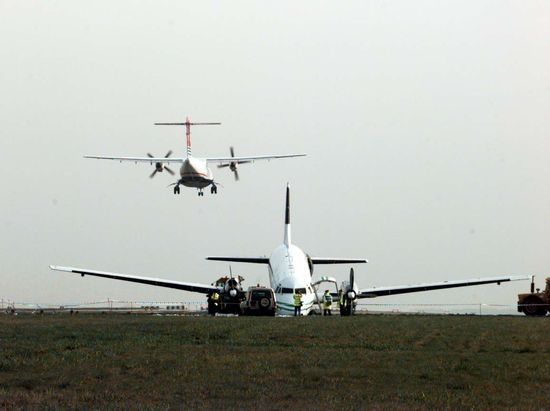
During my research, I found the Leeds United Crash Memories site. It is a glorious fount of information and visual resources from contemporaneous news reports from 1998 and beyond about the crash, and was created by Carole and Alex Hackett (the daughter and grandson of John Hackett). The site is a commemoration of John Hackett’s and his crew’s actions in ensuring the safety and continued life of the passengers on board. The site has also collected video testimonials from the passengers from that night in 1998. Through these testimonials, the onboard heroics have thankfully been immortalised in football’s historical lore.
Passenger Andy Rafter, in a touching message to Hackett, says that “There ain’t many days that go past and I don’t think about that particular night…after 25 years, it feels like yesterday.” In living his life, Rafter says, “I’ve just tried to be a good person,” and says to Hackett, “You are my hero, a true hero and I wish you good health and happiness for years to come.” I don’t need to recapitulate Hackett’s heroism any longer—the LUACM site does this concisely and expertly. Yet watching the passengers reflect upon the crash, we can see displayed the very human capacity to reflect upon their own mortality and express gratitude for the time given to them.
When we fly, we put our lives in the hands of the pilots and crew. We trust in them to do the proper thing at the right, proper time, and to the right, proper degree. We want every pilot to be a John Hackett, or Sully Sullenberger, or their ilk in experience and wisdom. With this trust in place, we leave the business of flying to the pilots in the cockpit. We are blind to ominous storm clouds ahead, deaf to the squawking of radio chatter, and uncomprehending of an importunately blinking red light. We leave them to their work, much like we leave our surgery to the doctors, and the sausage-making to the butchers. For our comfort, we remain unknowing of what they must know and deal with.
When it comes time to show gratitude for a safe landing, we typically direct a cursory thank you to the cabin crew as we disembark the plane. Our thanks are extended equally to the pilots through the cabin crew. Other shows of gratitude, such as the round of applause that sounds when rubber hits runway tarmac after a bumpy flight is seen by many as old hat, patronising, and obnoxious. Therefore, we limit our own opportunities of reflection. Creating a commemorative website every time a flight touches down safely would of course be hopelessly impracticable. Reserving a space in our mind for more than a moment’s appreciation and gratitude for safe passage across borders and time zones is enough; yet too often our minds are already on to the next thing, the next distraction, in our schedules and lives. This is why the LUACM site is so memorable and striking. The near-tragedy reminds us, but for the grace of God, we may experience such a horrible experience, and if we can extend gratitude and relief that our heroes are safe and can take the field for the next midweek or weekend fixture, surely, we can extend the same emotional courtesy to the wealth of experience and our own personal convictions that brought us back down to terra firma—especially when a brief round of applause is seen as too much.
* * *
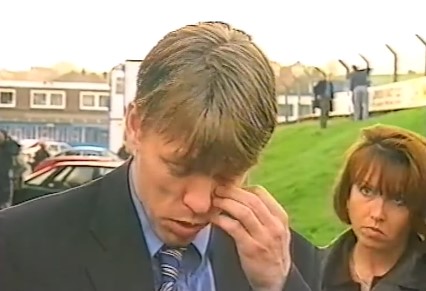
After Jimmy Floyd Hasselbaink had escaped the plane, he was asked by one of the crew if he was OK. “Am I OK? You call that a fucking takeoff?” he said. And we may well have asked the same question to the other passengers then and now. There isn’t a wealth of interviews with players and passengers in the hours following the crash. Leeds defender Gunnar Halle gave a brief interview after stepping off the coach at Elland Road. “It could have gone a lot worse,” he said. Gary Kelly gave an interview eight days after the crash prior to stepping out on the field against Chelsea. Then, of course, there are the calm and surefooted interviews given by David O’Leary. Amongst the players, there is very little to glean about the players’ emotional state from that time. We only get this from the LUACM video testimonials of players 25 years after the crash. We can, fortunately, defer to the opinions and thoughts of others outside the immediate confines of the Leeds United dressing room.
One of the most interesting perspectives is from Frank Taylor, the sole surviving journalist aboard the 1958 Munich air disaster, in TV interviews following the 1998 crash. He advocated for players to adopt a phlegmatic attitude post-crash, citing his own, and the Man Utd players’ he travelled with, long recovery from life-threatening injuries sustained in the 1958 disaster. That colonial, stiff upper lip disposition is reflected in quoting his then-doctor: “You should remember you had a blackout, and you awoke in a hospital. Your friends had a blackout, and they’ve awoken in eternity. It’s anybody’s guess which is the place to be.” Taylor emphasised the need for players to simply get on with their lives.
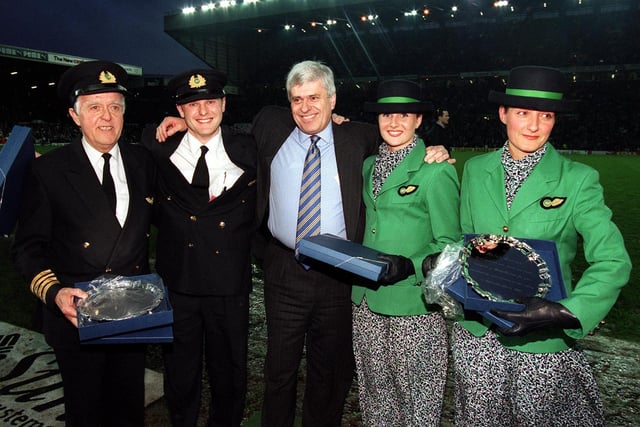
Fortunately, the players and passengers were able to walk away from their crash, forty years after the Munich disaster. They walked back to the Stansted terminal, shaken and stirred, and waited for the coaches to arrive to take them back to Leeds. During the three-hour wait at the terminal, wherein players called family and ate snacks, Peter Ridsdale noted the “strange camaraderie between us all.” Back at Leeds the next morning, players were given the day off to take stock, and to focus on the home matches against Barnsley and Chelsea three and four days later respectively. Apart from Lucas Radebe—who appeared in the Chelsea fixture—the Leeds United players featuring in both matchdays were all aboard the crash. Eight days after the crash, referencing the aforementioned ‘strange camaraderie’, captain Gary Kelly said that the crash “has just brought us all together so much, it’s just unbelievable…we’re rooting for one another now.” On the Chelsea matchday, John Hackett and his flight crew were commemorated on the pitch at Elland Road in front of 37,276 fans, and were given engraved watches and plaques. The James Bond theme even played over the tannoy. “All in a day’s work,” Hackett said in a press conference at the time.
Everyone got on with their job, phlegmatically so—especially the players. In those eight days following the crash, Leeds United won both their matches. Outwardly, on the pitch, survival seemingly enlivened and galvanised the players. They would continue flying, a necessary part of being a professional footballer—with some taking part in the 1998 World Cup, and from the following season until the end of 2002, Leeds United would fly abroad to play in Europe.
It defies belief that anyone could continue flying so soon after such a traumatic experience. Yet getting back in the air as part of ‘exposure therapy’ is a recommended way to overcome aerophobia and flight anxiety following a crash. Psychotherapy and Cognitive Behavioural Therapy (CBT) are also preferable courses of treatment over straight doses of medication. In an NBC article from 2018, one crash survivor highlighted the importance of simply getting back into the air. This seems to reflect the experiences of some of the passengers on the 1998 crash. Stephen Pygott flew again days after the crash—if he hadn’t, he’d never have flown again. Alan Swift, the Leeds United physiotherapist whose brother was injured in an unrelated plane crash, flew three weeks later with the same airline, on the same make of aircraft. Bryn Law took to flying again, but still experiences those sharp pricks of memory from 1998 when doing so. Lee Bowyer still gets nervy when flying, but continues to do so because he still wants to see family and the world. “If you’re nervous of flying,” Bowyer says, “fly with me. ‘Cause it can’t happen twice, surely.” The necessity of air travel for the sake of their livelihood and family perhaps brute-forced a solution for the passengers, and trauma be damned.
Knowing that many people would simply never board a flight again after experiencing such trauma makes the emotional efforts of the Leeds United players to actually do so a herculean one.
* * *
Peter Ridsdale, in an interview after the crash, said that air travel was “something that [the players are] going to have to confront.” Perhaps he was speaking for himself, too. At the time, players would have had to confront the anxiety, burgeoning phobias, and PTSD that could have gone undetected in the days and weeks after the crash. Trauma is bespoke to the individual, and it can be unrelenting in its unfathomably cruel edges and dark depths. Professional footballers live and perform in the limelight, and must develop a supreme mentality and high standard of physical prowess to succeed in football. Signs of their humanity manifest in mistakes on and off the field; these mistakes can be career-killers when passed through the prism of concentrated public attention and judgment, and the 24-hour news cycle. Purcell et al. in 2019 stated that even into the late 2010s, there was “no comprehensive framework or model of care to support and respond to the mental health needs of elite athletes” and urged the development of an adequate framework that, among other elements, focused on early intervention care and support for athletes who experienced stress levels exceeding their ability to cope. The presence of sports psychologists and therapists within club structure may not be enough to stave off what overcomes an athlete’s much-vaunted, so-called ‘supreme’ mentality. In the end, athletes are affected by the same things that affect us. Disaster and trauma are great levellers. Dennis Bergkamp famously suffered from a fear of flying, and Jesús Navas has suffered from extreme homesickness during his career. Yet players must get over it in double-time for the sake of continued on-field results.
An indication of this expectation of players is reflected in the vox pop interviews of two Leeds United fans on the street on the morning after the crash in 1998. One said, “As long as they’re all right, I don’t care”; whilst the other said, “I hope it doesn’t affect the play on Saturday.” Just get on with it. This perhaps dated catchcry and being ‘phlegmatic’ in the face of disaster and trauma are incompatible with a greater focus on acknowledging, recognising, managing, and treating declining mental health across society. To suggest that we simply ‘get on with it’ is antithetical to, and is a repudiation of, good mental health practice and mindfulness. There is nothing wrong in empathising with someone’s emotional pain and trauma without expecting anything back—this is another truth that the LUACM site tells us. It shouldn’t have to take an air crash to practise it.
In a great show of empathy, Leeds United and Aston Villa observed a moment of silence before the kick off of their December 2016 fixture for the victims of LaMia Flight 2933 over Colombia—a crash that basically wiped out the entire barnstorming Brazilian football club Chapecoense in November 2016. However, there have been instances in recent years where Leeds United fans have chanted about the Munich disaster in a tit-for-tat with Man Utd fans chanting about the two Leeds United fans killed in Istanbul in 2000. Where the capacity exists to show genuine empathy, there exists the snubbing of it in the malicious brinksmanship with opposing fans. Bryn Law commented on this in 1998, drawing upon his own experience of the crash, stating that for anyone to experience such trauma and still continue to chant about Munich would make them “subhuman”. This infers that all fans experience empathy and grief for those that they have emotional attachments to—and clearly, if reports of recent hypocritical chanting are true, then the capacity to remember may not always crossover with the capacity to be empathetic.
* * *
I began this write-up shortly before the tragedy of Jeju Air Flight 2216, wherein 179 of the 181 passengers and crew were killed when the plane crashed upon arrival at Muan International Airport, South Korea, on the morning of December 29th, 2024. This tragedy was simply unfathomable to comprehend by an already-grieving Korean nation still recovering from the sudden political instability caused by then-President Yoon Suk-yeol’s declaration of martial law on December 4th. Having lived in Korea now for many years, my wife and I woke up on the 29th to the news dominated by the crash. When news filtered out into the Korean streets on that wintry Sunday, the usual chirrup of the mid-morning stopped. I opened up the window of my fourth-floor apartment, and was struck dumbfounded by the lack of noise outside. The palpable quiet was disquieting. People inside, safe from the cold, watching the news and mourning for countrymen and women in collective grief. The sky was grey outside, being winter after all, but it felt like that sky was falling.
The causes of the crash, still under investigation at the time of writing, strike sharply at my thoughts. Both crashes—from 1998 and 2024—demand my attention. A couple of days after the Muan crash, the two most visible Korean footballers on the world stage in Son Heung-min (손흥민) and Hwang Hee-chan (황희찬) played against each other in the Tottenham v Wolves fixture. Hwang Hee-chan scored the opening goal for Wolves, celebrated, and then bowed his head in remembrance for the perished in the crash days before. Son Heung-min missed a penalty for Spurs. The match ended 2-2 and heaped more pressure on Spurs’ embattled Australian gaffer Ange “Mate” Postecoglou. Advertisements for ‘Squid Game 2’ on Netflix rounded the digital hoardings at Spurs’ Stadium, reminding everyone of the quality and validity of Korean-language content in the age of streaming. The Korean language uses the expression ‘Leeds Day’ (리즈시절, Lee-jeu si-jeol) as an everyday translation for somebody’s ‘heyday’, in reference to comparing Alan Smith’s shining Leeds United career with his injury-plagued time at Man Utd.
All these connections of my identity, spiritual makeup, interests, passions, and home entangled with each other; and more so than being an ode to noting things down contemporaneously, these connections deepened my received grief for the perished aboard the Muan flight, increased my empathy for Hwang Hee-chan and Son Heung-min for their collective loss, and solidified my desire to write something as a way to process my own thoughts on what was going on in my head. The cure to abhorrent and revolting chanting should not be derived from having to endure the trauma first-, second- or third-hand of a plane crash. And with fewer bastions of empathy, gratitude, and genuine self-reflection in public let alone on the internet, a site such as LUACM should be lauded for its aim in conveying a promise of simple and enduring beauty—a promise to remember, and in promising this, celebrating our capacity to empathise with others and ourselves.
* * *
John Hackett is duly remembered as a hero. And in many hero stories, there are often unheralded victims that act heroically. Just as Hackett and his flight crew kept flying, so did the other passengers aboard the flight. They went on with their lives, despite the external and internal turmoils that sought otherwise. Leeds United director and survivor Alec Hudson helped to build 4,000 council homes in Leeds. Gary Kelly has a cancer support centre named after him, and Norman Hunter’s annual charity event raises funds for cancer research. A wealth of managerial talent teaches the next generation of players. According to the LUACM site, 47 children and 41 grandchildren have been born to the passengers of the 1998 crash to date. One of those born was Erling Haaland, son of passenger Alfie Haaland. Less than eight days after the crash, Leeds United captain Gary Kelly became a father to his first son, and was there to see it. No greater immortalisation of averted disaster can be ascribed to John Hackett’s actions than the preserving of the life and time of those on board, and those that were yet to come.





 Dispatches from Row-Z